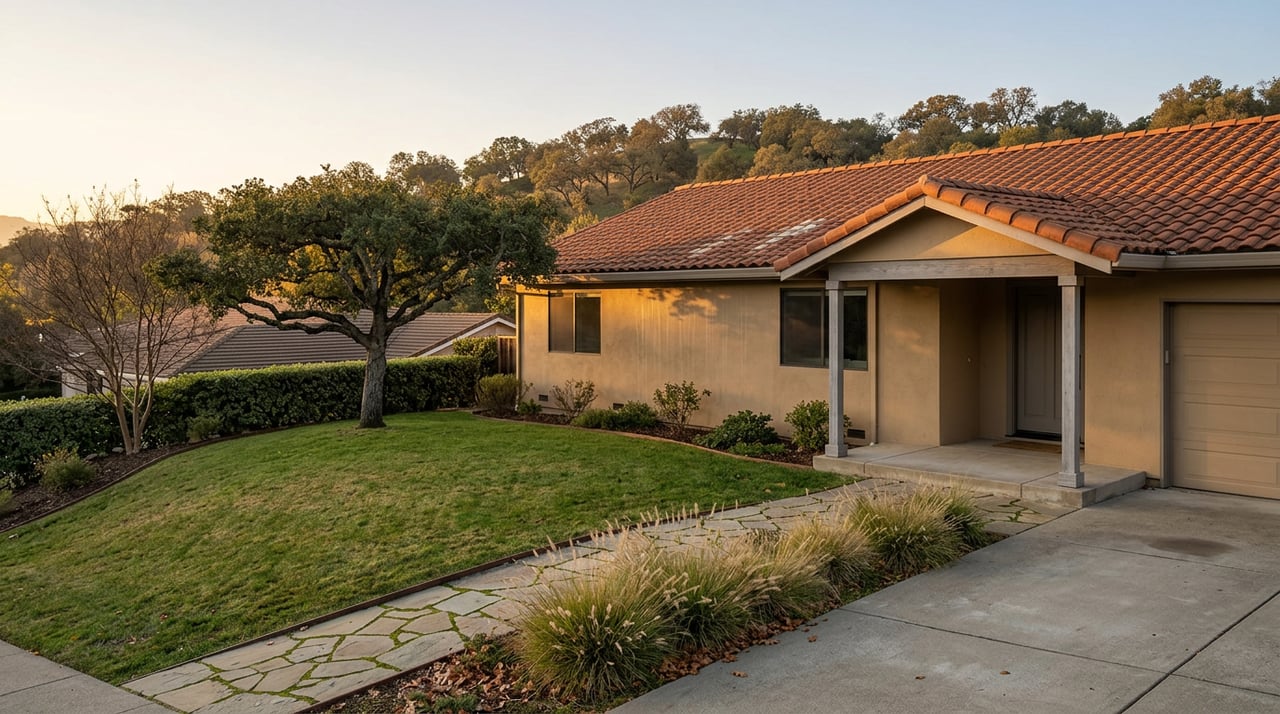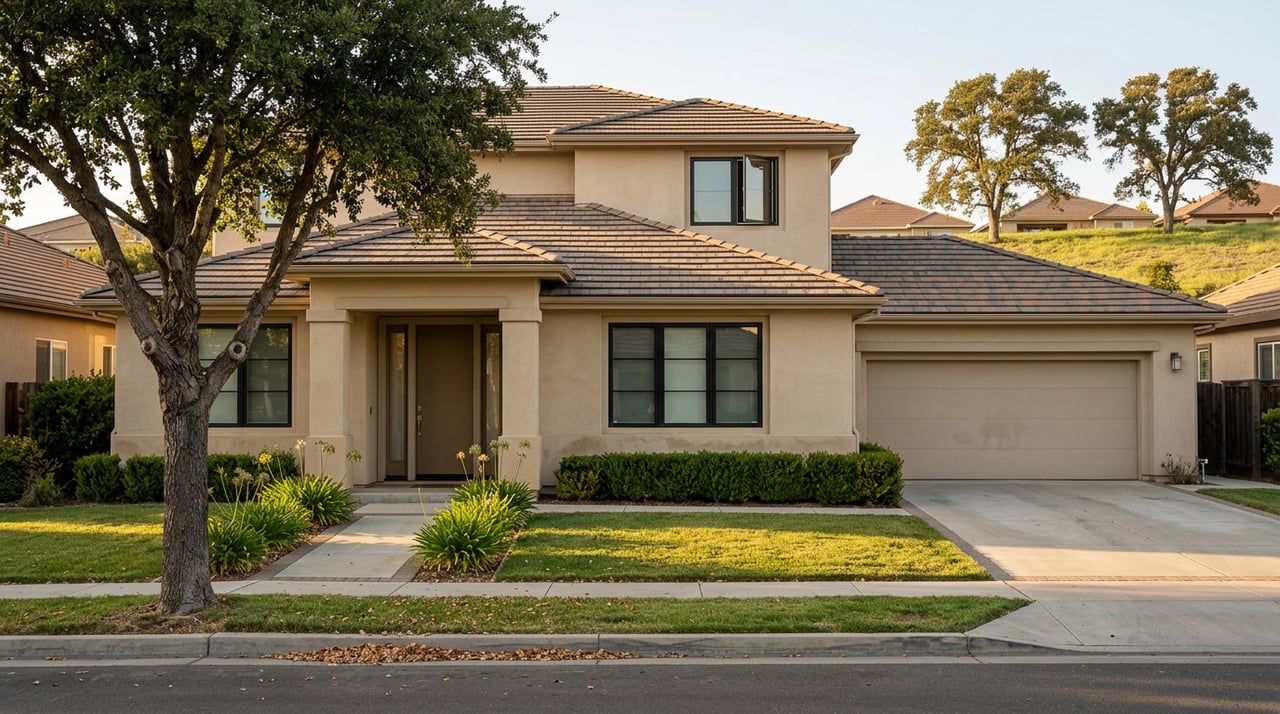
Picture two homes in East Dublin, both listed at $1.7 million, both new enough to still smell like fresh paint. On paper they're the same purchase. Run the actual carrying cost and one of them bills its owner close to $3,000 more a year than the other, every year, for decades, and neither listing sheet says so.
That gap isn't a pricing error. It's Mello-Roos, and in Dublin it doesn't work the way most buyers assume.
The Price Gap Everyone Already Sees
Anyone comparing neighborhoods in Dublin has already noticed the city splits into two very different markets. East Dublin, the newer master-planned side built out through communities like Positano, Jordan Ranch, and Schaefer Ranch, sits at the top of the pricing band, typically running $1.6 million to $2.8 million or more. West Dublin, with its older stock and smaller lots closer to the West Dublin/Pleasanton BART station, is the entry point, generally $900,000 to $1.4 million. Dublin's citywide median sale price sat around $1.3 million for the three months ending in June 2026, per Redfin, but that number blends two markets that don't behave the same way, so it isn't the figure a serious buyer should price against.
Most people stop their analysis there. New construction costs more, older homes cost less, and the difference is the difference. But that comparison only accounts for the number on the offer. It skips the number that shows up later.
The Gap Inside the Gap
Much of East Dublin's new construction sits inside a Community Facilities District, more commonly known by the name of the 1982 law that created the mechanism: Mello-Roos. A CFD is a bond-financed taxing zone drawn around a specific development to pay for the roads, schools, and parks that development needed built before anyone could move in. The tax rides on top of the standard 1 percent property tax base, and it's set by the boundaries of the specific district, not by the city as a whole.
Dublin currently has three of these districts on the books, with a fourth in progress. According to the city's own record of its Community Facilities Districts, CFD No. 2015-1 covers Dublin Crossing, CFD No. 2017-1 covers Dublin Crossing's public services on top of that, and CFD No. 2023-1 covers East Ranch. A proposed CFD No. 2024-1 would cover the still-developing Dublin Centre.
That list matters because it means "East Dublin has Mello-Roos" is too broad a statement to be useful. Each district is its own bond issue with its own formula, its own annual cap, and its own sunset date. A buyer comparing two tracts on the east side isn't comparing one tax rule against another. They're comparing entirely separate obligations that happen to sit inside the same city limits.
What One Documented Development Actually Pays
Dublin Crossing, the master-planned community marketed as Boulevard, is the clearest documented case. In fiscal year 2024-25, CFD No. 2015-1 levied roughly $3,912 to $5,830 a year per single-family home, with the exact figure depending on the home's size. The formula allows that maximum to climb by up to 2 percent annually, and the tax is not scheduled to run past fiscal year 2050-51. Because Dublin Crossing also carries the separate CFD No. 2017-1 for public services, the two charges stack. One documented parcel in the development owed $5,048 total across both districts in fiscal year 2025-26.
Run that as a monthly number and it's roughly $420 added to the carrying cost of an otherwise ordinary mortgage payment, on top of the base property tax, before HOA dues or insurance enter the picture. Other Dublin tracts carry their own separate districts with their own separate amounts and end dates. There's no shortcut that lets a buyer estimate one number and apply it everywhere on the east side. The only way to know what a specific parcel actually owes is to read it off that parcel's own title report.
The Timing Problem
Here's where the friction becomes real. In practice, buyers shopping East Dublin's new construction frequently first encounter this number on the preliminary title report, not on the listing sheet, not in the open house packet, and often not until the transaction is already moving. The home pencils out fine at the list price, the offer gets accepted, and only afterward does a charge in the thousands of dollars a year show up on paper.
By that point in a competitive transaction, contingencies may already be tightening or gone. If a buyer wrote a clean offer without a specific carve-out to review property tax liabilities, the options at that stage narrow fast: absorb a cost that wasn't in the original budget, try to negotiate a credit from the seller equal to the present value of the remaining payments, or walk away and risk the earnest money, typically 1 to 3 percent of the purchase price, put down to show the offer was serious.
None of those choices are as good as the fourth one, which only exists if the work happens before the offer goes in.
How to Check Before You Write the Offer
- Ask which specific CFD number applies to the parcel, not just whether the development "has Mello-Roos." Dublin Crossing alone carries two overlapping districts.
- Request the Rate and Method of Apportionment for that CFD. It's the document that sets the annual cap, currently up to 2 percent for Dublin Crossing's CFD No. 2015-1, and the sunset year the tax is scheduled to end.
- Pull the preliminary title report early in the process instead of waiting for it to arrive on its own timeline. Reading it during the inspection period, rather than after, is what keeps a contingency meaningful.
- Confirm whether the parcel sits inside more than one district. Charges stack, and Dublin Crossing's documented $5,048 total came from two CFDs layered on the same home.
- Build the annual charge into the monthly cost comparison alongside the mortgage payment and base property tax, the same way an HOA due gets budgeted, rather than treating it as a line that shows up later.
What This Means When You're Comparing Neighborhoods
The East Dublin versus West Dublin price gap is real and it's the one everyone already prices around. What it misses is that the gap inside East Dublin, tract to tract, can be nearly as consequential to a monthly budget once the special tax is added to the purchase price. Two homes at the same list price in two different East Dublin developments are not the same purchase once the CFD line is read correctly, and the only way to know which is which is to ask the specific question about the specific parcel before the offer, not after.
A Few Questions Worth Asking Directly
Does the special tax ever go away? Yes. Each CFD has a scheduled end year tied to when its bonds are repaid. Dublin Crossing's CFD No. 2015-1 is not set to run past fiscal year 2050-51, though it could end earlier if the bonds are retired ahead of schedule.
Is the charge the same for every home in a development? No. The formula typically scales with home size, so two houses in the same tract can carry different annual amounts even though they're in the same CFD.
Can the amount increase after I buy? The formula allows the maximum tax to rise year over year, but the increase is capped. For Dublin Crossing's CFD No. 2015-1, that cap is 2 percent annually.
Comparing East Dublin's master-planned communities against each other, or against the resale stock on the west side, takes more than a list price and a square footage number. It takes reading the specific parcel's tax obligations before the contingency clock starts running, not after. If you're weighing a purchase in Dublin Crossing, Positano, Schaefer Ranch, or anywhere else on the east side and want a second set of eyes on what a specific title report actually says, May Taliaferro Bell is happy to walk through it with you. Schedule a free consultation before you write the offer, not after.